

Sugerencias
Idioma
metricas
Publique en esta revista
Guía para autores
Buscador
Información de la revista
Vol. 60. Núm. 2.
Páginas 71-160 (Abril - Junio 2025)
Visitas
1319
Vol. 60. Núm. 2.
Páginas 71-160 (Abril - Junio 2025)
Scientific letter
Acceso a texto completo
Heart and mind: Depressive symptoms in acute myocardial infarction
Corazón y mente: síntomas depresivos en el infarto agudo de miocardio
Visitas
1319
Edgar Fabián Manrique-Hernándeza,b, Alexandra Hurtado-Ortiza,
Autor para correspondencia
alexandrajhop@gmail.com

Corresponding author.
, Maricel Licht-Ardilaa, Diana Ortegaa,c, Alejandra Mendoza-Monsalvea, Diana Cañona,c
a Departamento de Epidemiología, Fundación Cardiovascular de Colombia, Piedecuesta, Santander, Colombia
b Departamento de Salud Pública, Universidad Industrial de Santander, Bucaramanga, Santander, Colombia
c Departamento de Cardiología, Fundación Cardiovascular de Colombia, Piedecuesta, Santander, Colombia
Este artículo ha recibido
Información del artículo
Texto completo
Bibliografía
Descargar PDF
Estadísticas
Figuras (1)
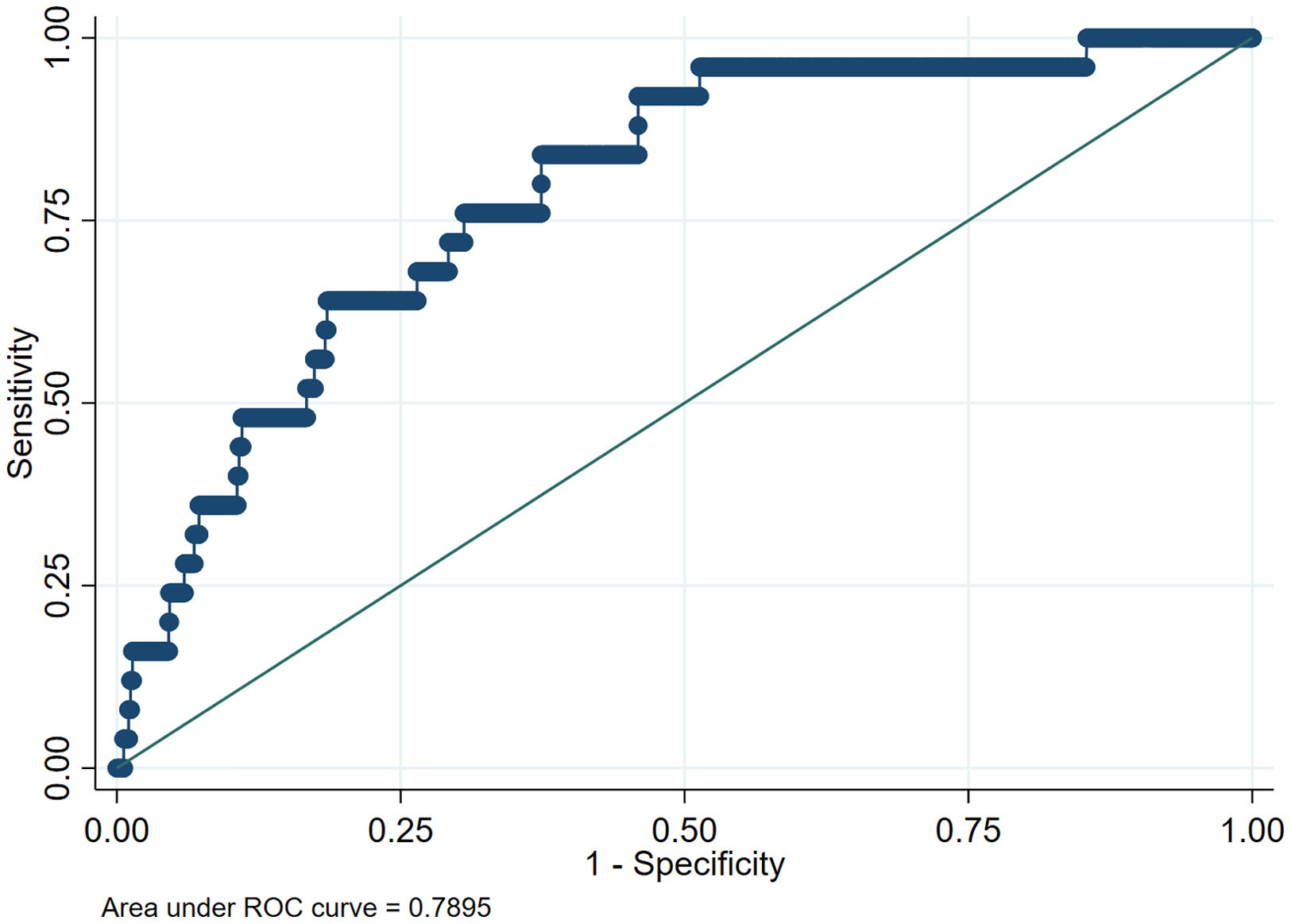
fig0005
Tablas (1)
Table 1. Factors associated with depressive symptoms in patients with acute myocardial infarction.
Tablas
Texto completo
To the Editor,

Depression is a high-impact condition worldwide, affecting individuals across all ages and socioeconomic strata, with significant consequences for social, occupational, and interpersonal functioning.1 It is estimated that 3.8% of the global population, including 5% of adults and 5.7% of those over 60, experience depression.2 Following an acute myocardial infarction (AMI), depression is prevalent and persistent, often leading to adverse outcomes.3 This study aims to analyze the presence of depressive symptoms and their associated factors in patients who have suffered an AMI.

An analytical cross-sectional study was conducted on adults aged 18 years and older who experienced Type 1 AMI between October 2021 and April 2024 at a high-complexity cardiovascular institution in Colombia. All participants provided informed consent. Data on sociodemographic, clinical, and paraclinical variables were extracted from medical records and the REDCap database. Depressive symptoms were assessed using the Zung Depression Scale, with a cutoff score of ≥ 40 indicating clinically relevant symptoms. The assessment was conducted by a psychologist during the patient's hospitalization, specifically between the acute coronary event and hospital discharge. This timing ensured that the evaluation occurred after stabilizing the patient's initial clinical presentation but before their discharge. Patients with hospital stays of less than 24h, as well as those with a self-reported history of diagnosed depression, were excluded from the study.

Statistical analysis began with the Shapiro–Wilk test for normality, followed by descriptive statistics for continuous variables and frequency distributions for categorical variables. Bivariate analysis was performed using the chi-square and Mann–Whitney U tests. A multivariate logistic regression model was developed to explore associations between independent variables and depressive symptoms, with model fit and predictive performance assessed via ROC curve analysis. The study complied with ethical standards and was approved by the Ethics Committee of the Fundación Cardiovascular de Colombia, with all patients providing informed consent under data protection regulations.

In a cohort of 1532 patients with AMI, 2.09% exhibited depressive symptoms. The general sample had a median age of 66 years [interquartile range 58–73], with 71.15% being male. Among the patients, 31.74% were single, separated, or divorced, while 65.64% were married or in a domestic partnership. Regarding educational background, 91.78% had some level of education, and the majority (81.9%) resided in urban areas. Hypertension was present in 66.99% of patients, diabetes in 33.14%, dyslipidemia in 35.36%, and hypothyroidism in 12.07%.

For those with depressive symptoms, the median age was 69 years [61.5–76.5]. Women were more likely to exhibit depressive symptoms compared to men (53.13% vs 46.88%; P=.002). Hypertension was also significantly associated with depression (P=.035). There was a trend toward higher prevalence of depressive symptoms among single, separated, or divorced individuals compared to those married or in a domestic partnership (50% vs 46.88%; P=.074).

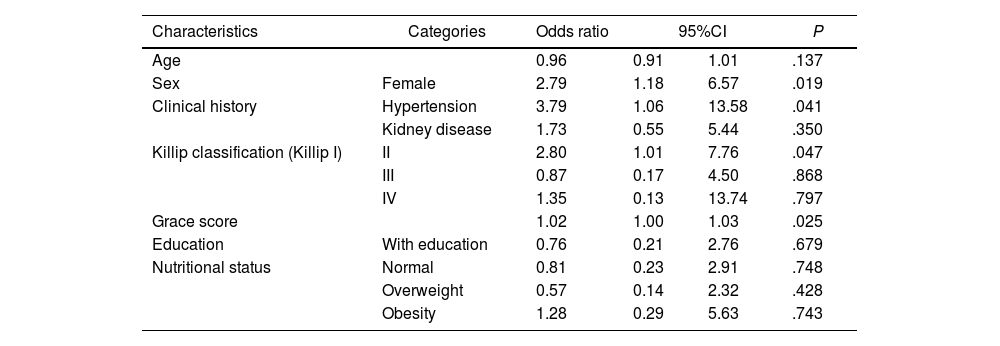
In terms of infarction types, 42.63% of patients without depressive symptoms experienced ST-segment elevation myocardial infarction, compared to 34.38% of those with depressive symptoms. However, this difference was not statistically significant (P=.35). Multivariate analysis identified female sex (odds ratio [OR], 2.79; P=.019), a history of hypertension (OR, 3.79; P=.041), Killip classification II (OR, 2.80; P=.047), and the Grace score (OR, 1.02; P=.025) as significantly associated with depressive symptoms according to the Zung scale (Table 1).

Table 1.

Factors associated with depressive symptoms in patients with acute myocardial infarction.

Characteristics  Categories  Odds ratio  95%CIP 
Age    0.96  0.91  1.01  .137 
Sex  Female  2.79  1.18  6.57  .019 
Clinical historyHypertension  3.79  1.06  13.58  .041 
Kidney disease  1.73  0.55  5.44  .350 
Killip classification (Killip I)II  2.80  1.01  7.76  .047 
III  0.87  0.17  4.50  .868 
IV  1.35  0.13  13.74  .797 
Grace score    1.02  1.00  1.03  .025 
Education  With education  0.76  0.21  2.76  .679 
Nutritional statusNormal  0.81  0.23  2.91  .748 
Overweight  0.57  0.14  2.32  .428 
Obesity  1.28  0.29  5.63  .743 

95%CI: 95% confidence interval; Grace: global registry of acute coronary events.

The ROC curve for the logistic regression model predicting depressive symptoms in AMI patients showed an area under the curve of 0.79, indicating that the included variables have a moderately good predictive capacity for distinguishing between individuals with and without depressive symptoms (Fig. 1).

Fig. 1.

ROC curve of the logistic regression model for the presence of depressive symptoms in patients with acute myocardial infarction. ROC, receiver operating characteristic.

This study identified key factors associated with depressive symptoms in patients with AMI, revealing a notably low prevalence of depressive symptoms compared to global reports by the World Health Organization. A significant association between female sex and depressive symptoms was observed, indicating that women with AMI are at a higher risk of developing depressive symptoms. These findings align with previous research documenting a higher prevalence among women, irrespective of their medical conditions.4,5

Additionally, the analysis of comorbidities highlighted a significant link between hypertension and depressive symptoms. This association supports existing research suggesting that hypertension can act as both a precursor and a consequence of depression.6 Recent studies have explored underlying mechanisms, such as a sustained sympathetic response leading to increased blood pressure, which persists up to 6 months post-AMI. This connection underscores the need for personalized and effective intervention strategies that address both conditions concurrently.4

However, despite the Zung scale being a validated tool, its ability to fully capture the range of depressive symptoms in AMI patients may be limited, potentially contributing to the lower-than-expected prevalence observed in our sample. Moreover, the study's cross-sectional design restricts our capacity to assess the persistence of depressive symptoms over time, making it difficult to distinguish between preexisting depression, transient depressive symptoms during the acute phase of AMI, and post-AMI depression. The lack of detailed psychiatric history and short-term follow-up further hampers the interpretation of depressive symptoms as a comorbidity or prognostic factor. Additionally, the associations between depressive symptoms and clinical factors, such as Killip class II but not III or IV, may reflect sample-specific characteristics or methodological limitations. Future research should aim to address these limitations by incorporating longitudinal designs and more comprehensive psychiatric assessments better to elucidate the role of depression in AMI patients and enhance the generalizability of the findings.

In summary, while this study identified a low prevalence of depressive symptoms (2.09%) in AMI patients, it highlighted critical associations between female sex and hypertension. The findings underscore the need for a holistic approach that considers both physical and psychological factors to improve the prognosis of AMI patients. The results also suggest that sociodemographic and clinical characteristics play a vital role in identifying and managing depressive symptoms, emphasizing the importance of personalized interventions to address individual differences in psychological well-being.

Funding

The authors declare that there was no funding for the present project.

Ethical considerations

The study complied with ethical standards and was approved by the Ethics Committee of the Fundación Cardiovascular de Colombia, with all patients providing informed consent under data protection regulations. A limitation of this study is that only the biological sex of the participants was considered, without considering gender. By not including this dimension, an important factor may be overlooked in fully understanding the differences and inequalities that affect gender-diverse individuals.

Statement on the use of artificial intelligence

No artificial intelligence was used.

Authors’ contributions

E.F. Manrique-Hernández, A. Hurtado-Ortiz, M. Licht-Ardila, D. Ortega, A. Mendoza and D. Cañón have participated in the conception and design, analysis and interpretation of data, writing, and revision of the manuscript.

Conflicts of interest

All authors report that they have no relationships relevant to the contents of this paper.

References
[1]
Â. Ribeiro, J.P. Ribeiro, O. von Doellinger.
Depression and psychodynamic psychotherapy.
Braz J Psychiatry, 40 (2018), pp. 105-109
[2]
GBD Results. Institute for Health Metrics and Evaluation. Available from: https://vizhub.healthdata.org/gbd-results [accessed 12.06.24].
[3]
J. Barth, M. Schumacher, C. Herrmann-Lingen.
Depression as a risk factor for mortality in patients with coronary heart disease: a meta-analysis.
Psychosom Med, 66 (2004), pp. 802-813
[4]
K. Liblik, S.L. Mulvagh, C.C.T. Hindmarch, N. Alavi, A.M. Johri.
Depression and anxiety following acute myocardial infarction in women.
Trends Cardiovasc Med, 32 (2022), pp. 341-347
[5]
L. Parkin, A. Balkwill, J. Green, et al.
Depression, anxiety, psychotropic drugs, and acute myocardial infarction: large prospective study of United Kingdom women.
Psychol Med, 53 (2023), pp. 1576-1582
[6]
D. Collazos-Perdomo, C.F. Ramirez-Ramos, M.Y. Torres de Galvis, et al.
Association between major depression and arterial hypertension in a Colombian population.
Hipertens Riesgo Vasc, 37 (2020), pp. 162-168
Copyright © 2024. Sociedad Española de Cardiología
Descargar PDF
Idiomas
REC: CardioClinics
Opciones de artículo
Herramientas