

Sedentary lifestyles and physical activity are key areas of scientific focus owing to their impact on the main causes of morbidity and mortality worldwide, especially in vulnerable populations. The objectives of this study were to estimate the prevalence of sedentary behaviour in people over 64 years of age living in Spain with cardiovascular disease or cardiovascular risk factors, and to analyse the associated chronic diseases.
MethodsWe conducted a population-based cross-sectional study using data from the 2017 Spanish National Health Survey. The sample comprised people aged over 64 years who had at least 1 of the following: hypertension, diabetes, high cholesterol, history of acute myocardial infarction, or history of stroke. We used Poisson models with robust variance to estimate prevalence ratios.
ResultsAmong a representative sample of 5314 people, the prevalence of sedentary behaviour was 32.2%. Sedentary behaviour was more common in women, older people, and people with urinary incontinence or mental disorders.
ConclusionsWe found a moderate-to-high level of sedentary behaviour in a Spanish population aged over 64 years with cardiovascular risk factors or a history of myocardial infarction or stroke. Factors associated with higher levels of sedentary behaviour were female sex, older age, urinary incontinence, and mental health disorders. Longitudinal studies with greater precision are needed to delve deeper into these associations.
El sedentarismo y la actividad física son áreas clave de interés científico debido a su impacto en las principales causas de morbilidad y mortalidad mundial, especialmente en poblaciones vulnerables. Los objetivos de este estudio fueron estimar la prevalencia del sedentarismo en personas mayores de 64 años residentes en España con enfermedad cardiovascular o factores de riesgo cardiovascular y analizar las enfermedades crónicas asociadas.
MétodosSe realizó un estudio transversal de base poblacional utilizando datos de la Encuesta Nacional de Salud de España de 2017. La muestra estuvo compuesta por personas mayores de 64 años que presentaban al menos uno de los siguientes: hipertensión, diabetes, colesterol alto, antecedentes de infarto agudo de miocardio o antecedentes de ictus. Se utilizaron modelos de Poisson con varianza robusta para estimar las razones de prevalencia.
ResultadosEn una muestra representativa de 5.314 personas, la prevalencia del sedentarismo fue del 32,2%. El sedentarismo fue más común en mujeres, personas mayores y personas con incontinencia urinaria o trastornos mentales.
ConclusionesSe ha encontrado un nivel moderado-alto de sedentarismo en población española mayor de 64 años con factores de riesgo cardiovascular o antecedentes de infarto de miocardio o ictus. Los factores asociados a un mayor nivel de sedentarismo fueron el sexo femenino, la edad avanzada, la incontinencia urinaria y los trastornos de salud mental. Se necesitan estudios longitudinales con mayor precisión para profundizar en estas asociaciones.
Sedentary behaviour is commonly associated with physical activity.1 In their study of 20 European countries, Guthold et al. found that 28% of the Spanish population was physically inactive, positioning Spain among the 10 least active nations.2,3 According to the World Health Organization, chronic diseases are responsible for 74% of annual deaths. The main modifiable cardiovascular risk factors are present in more than half of people suffering from cardiovascular diseases.4 In Spain, the prevalence has increased between 1993 and 2017, 3.4% for diabetes, 9.7% dyslipidemia and 8.6% in hypertension.5
Cancer was a leading cause of mortality worldwide in 2021, leading to 9.9 million deaths. According to data from the Spanish Society of Medical Oncology, cancer caused 113,000 deaths in Spain in 2020.6 Between 2000 and 2019, respiratory diseases were the third leading cause of death from non-communicable diseases, claiming 4.1 million lives, followed by diabetes in fourth place with 2.0 million deaths.7
Sedentary behaviour and physical inactivity are key areas of scientific interest due to their impact on the main causes of global morbidity and mortality. According to the World Health Organization, sedentary lifestyle is the fourth leading risk factor for mortality worldwide.8 Researchers have analysed sedentary behaviour and physical activity separately to demonstrate their effect on cardiovascular risk and the prevalence of cardiovascular diseases in adults aged 18 to 75 years in the United States, Canada, Central America, Australia, Japan, the United Kingdom, Norway, and Denmark. Their results suggest a dose-response relationship between sitting time, different levels of physical activity, and cardiovascular risk.9,10
Regarding cardiovascular diseases, physical exercise influences the risk of myocardial infarction between the ages of 40 and 75 years,11 and may increase the risk of unstable atherosclerotic plaques, associated with a higher incidence of stroke in people aged 61.2 years and 81.9 years.12 The prevalence of chronic diseases such as cancer and dementia have been associated with low levels of physical activity. Dementia has a positive association with cognitive stimulation activities performed during periods of sedentary lifestyle.13
Research suggests that sedentary behaviour leads to lower quality of life and higher levels of disability, and may worsen mental disorders, control of chronic pain,14 and motor symptoms of diseases such as Parkinson's disease.15 The World Health Organization adopted the Comprehensive Mental Health Action Plan 2013–2030 during its 66th World Health Assembly in Geneva, having established that mental ill-health would be the leading cause of disability by 2030.16 In one study based on data from the 2017 Spanish National Health Survey (ENSE17), López-Bueno et al. found that physical inactivity in working people was associated with the presence of at least 1 chronic condition (hypertension, diabetes, anxiety, depression, chronic neck pain, or chronic low back pain).17
The literature describes the distribution of sedentary behaviour and its association with chronic diseases in the Spanish, European, and global populations, particularly in people under 70 years of age. However, in Spain, where mean life expectancy is 82.7 years, there is little published research on the prevalence of sedentary behaviour and its relationship with comorbidity in older people.18–22 The objectives of this study were to estimate the prevalence of sedentary behaviour in people aged over 64 years living in Spain with cardiovascular disease or cardiovascular risk factors, and to analyse the associated chronic diseases.
Materials and methodsWe conducted a population-based cross-sectional study using data from ENSE17. The data is public and free from the Spanish National Institute of Statistics website.23 The sample comprised people aged over 64 years who had hypertension, diabetes, high cholesterol, a history of acute myocardial infarction, and/or a history of stroke, according to questions 25c: “Has a doctor told you that you have it?”
We analysed sedentary behaviour as a dichotomous variable, based on the responses to 2 survey questions: question P111 “Which option best describes your main activity at work, school, home (housework), etc.?”; and question P112 “Which of these options best describes how often you do some form of physical activity in your free time?”. We considered respondents had a sedentary lifestyle if they answered “Sitting most of the day” for question P111 and “I don’t exercise. I spend almost all my free time sitting (reading, watching television, going to the cinema, etc.)” for question P112. All other responses were understood to reflect a non-sedentary lifestyle.
VariablesThe independent variables were as follows:
ComorbiditiesThe comorbidities were asthma, bronchitis, gastric ulcer, urinary incontinence, cataracts, skin problems, constipation, cirrhosis, depression, anxiety, other mental disorders, migraines, haemorrhoids, cancer, osteoporosis, thyroid problems, kidney problems, varicose veins in lower limbs, osteoarthritis, neck pain, lower back pain, allergies, injuries, and accidents, according to question 25c “Has a doctor told you that you have it?”. The categories for these variables were dichotomous (yes/no).
Sociodemographic characteristicsThe sociodemographic characteristics were sex (man or women), age (in 3 groups: 65–74 years, 75–84 years, >84 years), marital status (widowed, single, married, separated, divorced), country of birth (Spain, outside Spain), Spanish autonomous community of birth (Andalusia, Aragon, Asturias, Balearic Islands, Canary Islands, Cantabria, Castile and Leon, Castile-La Mancha, Catalonia, Valencian Community, Extremadura, Galicia, Madrid, Murcia, Navarre, Basque Country, La Rioja, Ceuta-Melilla), educational level (illiterate, incomplete primary education, complete primary education, compulsory secondary education, post-compulsory secondary education, intermediate vocational training, higher-level vocational training, university level), and job level (director with more than 10 employees, director with less than 10 employees, intermediate occupation/self-employed, skilled technical worker, skilled primary sector worker, unskilled worker).
LifestyleThe lifestyle variables were smoking (never-smoker, ex-smoker, current smoker), alcohol intake (daily, 5–6 days/week, 3–4 days/week, 1–2 days/week, 2–3 days/month, once a month, less than once a month, none in that last 12 months, never), fruit and vegetable consumption (neither fruit nor vegetables daily, fruit or vegetables daily, fruit and vegetables daily), toothbrushing (never, occasionally, once daily, twice daily, 3 or more times daily).
Health status and use of servicesThese variables were self-perceived health (very good, good, fair, bad, very bad), use of glasses or contact lenses (yes/no), use of hearing aids (yes/no), emergency department visits in the last year (yes/no), hospital admissions in the last year (yes/no), diagnostic tests (X-ray, ultrasound scans, computed tomography scans, magnetic resonance imaging scans) in the last year (yes/no), and flu vaccine in the last year (yes/no).
Statistical analysisWe performed a descriptive analysis of the results, calculating frequencies for categorical variables and minimum, maximum, and mean values (with standard deviation) for continuous variables. We analysed associations between sedentary lifestyle and chronic cardiovascular disease through contingency tables, applying the Chi-square test for categorical variables and the Student t test for continuous variables.
To estimate the magnitude of associations with sedentary behaviour, we calculated prevalence ratios (PR) with their 95% confidence intervals (95%CI) by fitting Possion multivariable models with robust variance.24 We used a stepwise approach based on the Akaike information criterion to select variables. We calculated goodness-of-fit and classification indicators such as the area under the receiver operating characteristics curve.
To obtain representative estimates for the Spanish population, we took the complex sampling design into account, using as a weighting factor the raising factor of the survey divided by its mean; this method provides weights centred around the mean.25 We used SPSS v.28 (IBM Corp. United States) and R v 4.0.2 (R Core Team, Austria) for the statistical analysis.
Ethical aspectsThe ENSE17 data are public and anonymised, which means respondents cannot be identified. The Office of Responsible Research Evaluation at Miguel Hernández University approved our study, acting as Ethics Committee and exempting this study from informed consent (ref. AUT.DES.DOB.EFQ.24.).
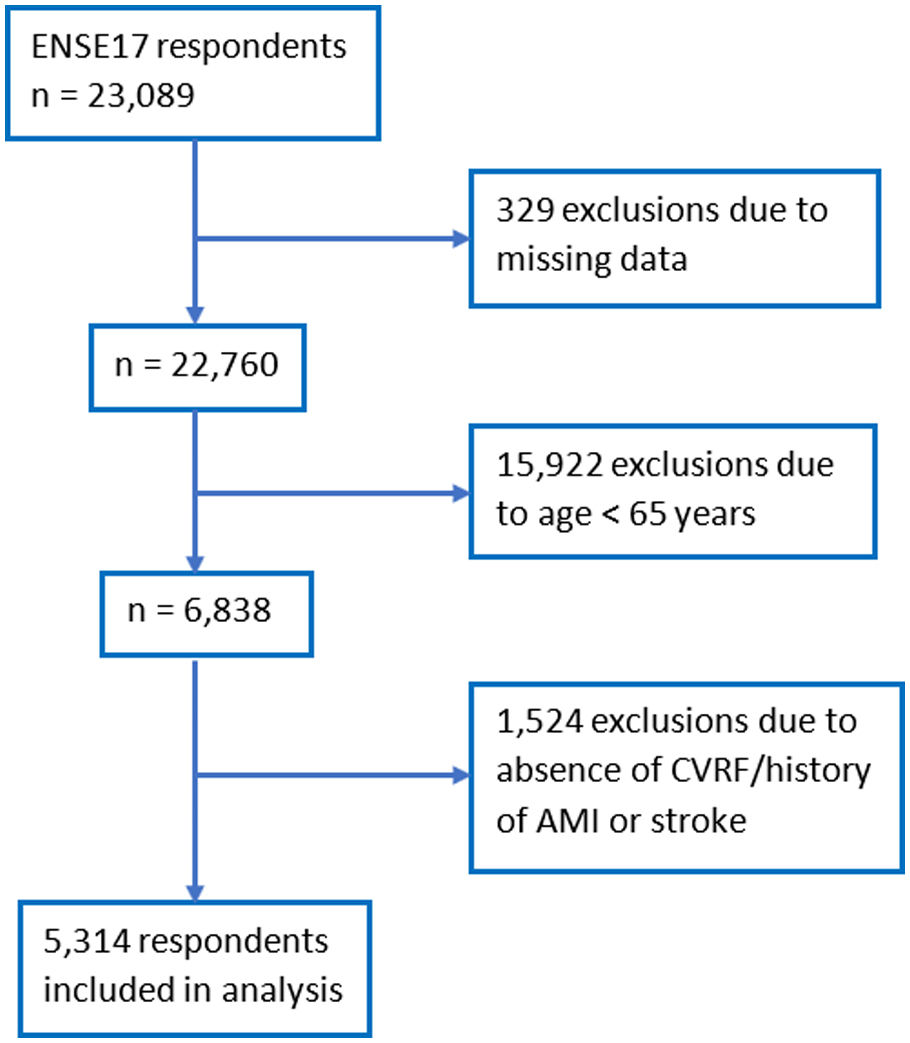
ResultsWe excluded 17,775 of the 23,089 ENSE17 respondents from our analysis, because they were aged under 65 years (n=15,922; 68.9%), they had no chronic diseases (n=1524; 6.6%), or they had missing data for 1 or more of our study variables (n=329; 1.4%). Consequently, our study included 5314 respondents (Fig. 1).
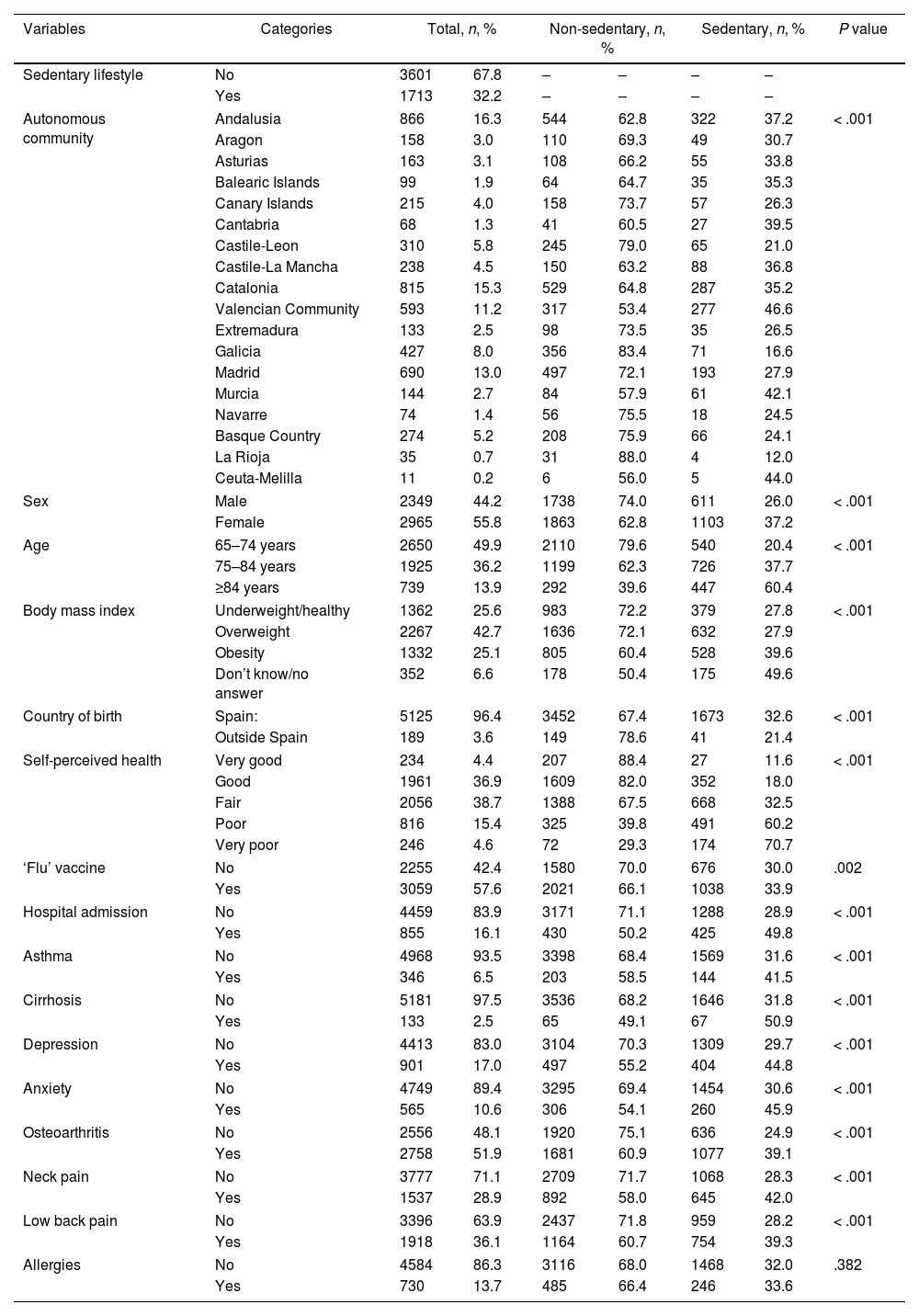
Table 1, and Table 1 of the supplementary data present the characteristics of the sample: 55.8% of respondents were women, the mean age was 75.7 years (range 65–101 years), 13.9% were older than 84 years, 25.1% had obesity, 20% had poor or very poor self-perceived health, 17% had depression, 10.6% had anxiety, 51.9% had osteoarthritis, 28.9% had neck pain, and 36.1% had low back pain.
Characteristics of the sample and prevalence of sedentary lifestyles.
| Variables | Categories | Total, n, % | Non-sedentary, n, % | Sedentary, n, % | P value | |||
|---|---|---|---|---|---|---|---|---|
| Sedentary lifestyle | No | 3601 | 67.8 | – | – | – | – | |
| Yes | 1713 | 32.2 | – | – | – | – | ||
| Autonomous community | Andalusia | 866 | 16.3 | 544 | 62.8 | 322 | 37.2 | < .001 |
| Aragon | 158 | 3.0 | 110 | 69.3 | 49 | 30.7 | ||
| Asturias | 163 | 3.1 | 108 | 66.2 | 55 | 33.8 | ||
| Balearic Islands | 99 | 1.9 | 64 | 64.7 | 35 | 35.3 | ||
| Canary Islands | 215 | 4.0 | 158 | 73.7 | 57 | 26.3 | ||
| Cantabria | 68 | 1.3 | 41 | 60.5 | 27 | 39.5 | ||
| Castile-Leon | 310 | 5.8 | 245 | 79.0 | 65 | 21.0 | ||
| Castile-La Mancha | 238 | 4.5 | 150 | 63.2 | 88 | 36.8 | ||
| Catalonia | 815 | 15.3 | 529 | 64.8 | 287 | 35.2 | ||
| Valencian Community | 593 | 11.2 | 317 | 53.4 | 277 | 46.6 | ||
| Extremadura | 133 | 2.5 | 98 | 73.5 | 35 | 26.5 | ||
| Galicia | 427 | 8.0 | 356 | 83.4 | 71 | 16.6 | ||
| Madrid | 690 | 13.0 | 497 | 72.1 | 193 | 27.9 | ||
| Murcia | 144 | 2.7 | 84 | 57.9 | 61 | 42.1 | ||
| Navarre | 74 | 1.4 | 56 | 75.5 | 18 | 24.5 | ||
| Basque Country | 274 | 5.2 | 208 | 75.9 | 66 | 24.1 | ||
| La Rioja | 35 | 0.7 | 31 | 88.0 | 4 | 12.0 | ||
| Ceuta-Melilla | 11 | 0.2 | 6 | 56.0 | 5 | 44.0 | ||
| Sex | Male | 2349 | 44.2 | 1738 | 74.0 | 611 | 26.0 | < .001 |
| Female | 2965 | 55.8 | 1863 | 62.8 | 1103 | 37.2 | ||
| Age | 65–74 years | 2650 | 49.9 | 2110 | 79.6 | 540 | 20.4 | < .001 |
| 75–84 years | 1925 | 36.2 | 1199 | 62.3 | 726 | 37.7 | ||
| ≥84 years | 739 | 13.9 | 292 | 39.6 | 447 | 60.4 | ||
| Body mass index | Underweight/healthy | 1362 | 25.6 | 983 | 72.2 | 379 | 27.8 | < .001 |
| Overweight | 2267 | 42.7 | 1636 | 72.1 | 632 | 27.9 | ||
| Obesity | 1332 | 25.1 | 805 | 60.4 | 528 | 39.6 | ||
| Don’t know/no answer | 352 | 6.6 | 178 | 50.4 | 175 | 49.6 | ||
| Country of birth | Spain: | 5125 | 96.4 | 3452 | 67.4 | 1673 | 32.6 | < .001 |
| Outside Spain | 189 | 3.6 | 149 | 78.6 | 41 | 21.4 | ||
| Self-perceived health | Very good | 234 | 4.4 | 207 | 88.4 | 27 | 11.6 | < .001 |
| Good | 1961 | 36.9 | 1609 | 82.0 | 352 | 18.0 | ||
| Fair | 2056 | 38.7 | 1388 | 67.5 | 668 | 32.5 | ||
| Poor | 816 | 15.4 | 325 | 39.8 | 491 | 60.2 | ||
| Very poor | 246 | 4.6 | 72 | 29.3 | 174 | 70.7 | ||
| ‘Flu’ vaccine | No | 2255 | 42.4 | 1580 | 70.0 | 676 | 30.0 | .002 |
| Yes | 3059 | 57.6 | 2021 | 66.1 | 1038 | 33.9 | ||
| Hospital admission | No | 4459 | 83.9 | 3171 | 71.1 | 1288 | 28.9 | < .001 |
| Yes | 855 | 16.1 | 430 | 50.2 | 425 | 49.8 | ||
| Asthma | No | 4968 | 93.5 | 3398 | 68.4 | 1569 | 31.6 | < .001 |
| Yes | 346 | 6.5 | 203 | 58.5 | 144 | 41.5 | ||
| Cirrhosis | No | 5181 | 97.5 | 3536 | 68.2 | 1646 | 31.8 | < .001 |
| Yes | 133 | 2.5 | 65 | 49.1 | 67 | 50.9 | ||
| Depression | No | 4413 | 83.0 | 3104 | 70.3 | 1309 | 29.7 | < .001 |
| Yes | 901 | 17.0 | 497 | 55.2 | 404 | 44.8 | ||
| Anxiety | No | 4749 | 89.4 | 3295 | 69.4 | 1454 | 30.6 | < .001 |
| Yes | 565 | 10.6 | 306 | 54.1 | 260 | 45.9 | ||
| Osteoarthritis | No | 2556 | 48.1 | 1920 | 75.1 | 636 | 24.9 | < .001 |
| Yes | 2758 | 51.9 | 1681 | 60.9 | 1077 | 39.1 | ||
| Neck pain | No | 3777 | 71.1 | 2709 | 71.7 | 1068 | 28.3 | < .001 |
| Yes | 1537 | 28.9 | 892 | 58.0 | 645 | 42.0 | ||
| Low back pain | No | 3396 | 63.9 | 2437 | 71.8 | 959 | 28.2 | < .001 |
| Yes | 1918 | 36.1 | 1164 | 60.7 | 754 | 39.3 | ||
| Allergies | No | 4584 | 86.3 | 3116 | 68.0 | 1468 | 32.0 | .382 |
| Yes | 730 | 13.7 | 485 | 66.4 | 246 | 33.6 | ||
Data is expressed as number (n) or percentage ().
The overall prevalence of sedentary behaviour was 32.2% (n=1713). The rate was higher in women (37.2%), older people (37.7% among those aged 75–84 years and 60.4% among those aged over 84 years), people with obesity (39.6%), and people whose self-perceived health was poor (60.2%) or very poor (70.7%). Sedentary behaviour was more common in people with depression (44.8%), anxiety (45.9%), osteoarthritis (39.1%), neck pain (42.0%), and back pain (39.3%). We also found higher rates in people who had made use of the health services in the last year; for example, those who had had an X-ray (39.3%), computed tomography scan (42.7%), ultrasound scan (35.0%), or magnetic resonance imaging scan (37.0%); those who had been admitted to hospital (49.8%); and those who had been to the emergency department (46.2%). Table 1 of the supplementary data shows the prevalences for all explanatory variables.
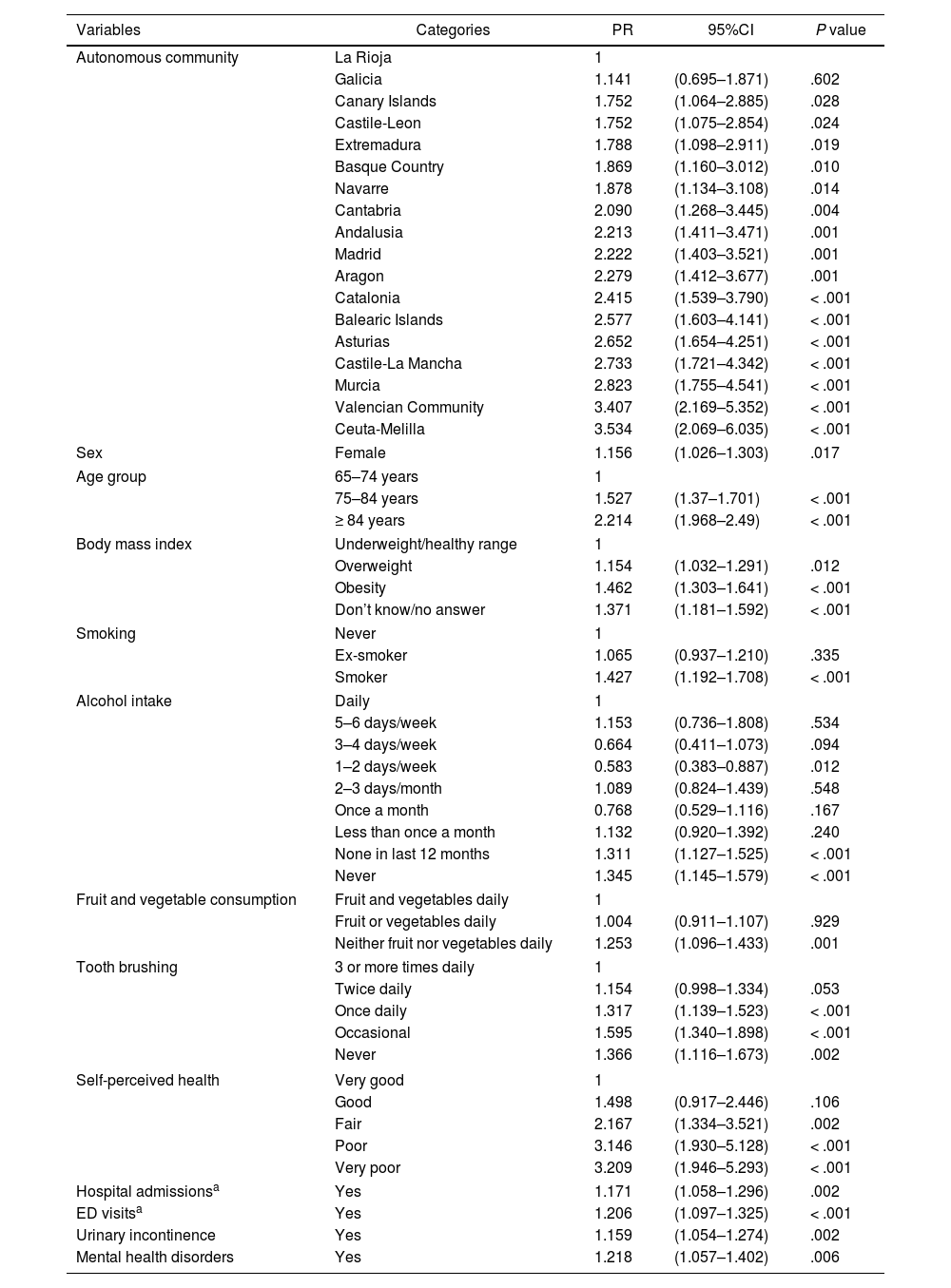
Table 2 shows the PR of sedentary behaviour estimated by multivariable Poisson models with robust variance. These results demonstrate a significantly higher prevalence of sedentary behaviour in the regions of Castile-La Mancha (PR, 2.733), Murcia (PR, 2.823) and the Valencian Community (PR, 3.407); in women (PR, 1.156), older people (75–84 years: PR, 1.527; > 84 years: PR, 2.214), people with overweight (PR, 1.154) and obesity (PR, 1.462), current smokers (PR, 1.427), people who had consumed no alcohol in the last 12 months (PR, 1.311) or who never drink (PR, 1.345), people whose self-perceived health was fair (PR, 2.167), poor (PR, 3.146), or very poor (PR, 3.209), people who had been admitted to hospital (PR, 1.171) or had been to the emergency department (PR, 1.206) in the last year, people with urinary incontinence (PR, 1.159) and people with mental disorders other than depression or anxiety (RP, 1.218). The model fits the data well (likelihood ratio test [LRT] Chi squared, 939; P<.001) and has good discriminatory capacity (area under the curve, 0.814, 95% CI 0.803–0.827).
Prevalence ratios of sedentary lifestyles estimated by Poisson models.
| Variables | Categories | PR | 95%CI | P value |
|---|---|---|---|---|
| Autonomous community | La Rioja | 1 | ||
| Galicia | 1.141 | (0.695–1.871) | .602 | |
| Canary Islands | 1.752 | (1.064–2.885) | .028 | |
| Castile-Leon | 1.752 | (1.075–2.854) | .024 | |
| Extremadura | 1.788 | (1.098–2.911) | .019 | |
| Basque Country | 1.869 | (1.160–3.012) | .010 | |
| Navarre | 1.878 | (1.134–3.108) | .014 | |
| Cantabria | 2.090 | (1.268–3.445) | .004 | |
| Andalusia | 2.213 | (1.411–3.471) | .001 | |
| Madrid | 2.222 | (1.403–3.521) | .001 | |
| Aragon | 2.279 | (1.412–3.677) | .001 | |
| Catalonia | 2.415 | (1.539–3.790) | < .001 | |
| Balearic Islands | 2.577 | (1.603–4.141) | < .001 | |
| Asturias | 2.652 | (1.654–4.251) | < .001 | |
| Castile-La Mancha | 2.733 | (1.721–4.342) | < .001 | |
| Murcia | 2.823 | (1.755–4.541) | < .001 | |
| Valencian Community | 3.407 | (2.169–5.352) | < .001 | |
| Ceuta-Melilla | 3.534 | (2.069–6.035) | < .001 | |
| Sex | Female | 1.156 | (1.026–1.303) | .017 |
| Age group | 65–74 years | 1 | ||
| 75–84 years | 1.527 | (1.37–1.701) | < .001 | |
| ≥ 84 years | 2.214 | (1.968–2.49) | < .001 | |
| Body mass index | Underweight/healthy range | 1 | ||
| Overweight | 1.154 | (1.032–1.291) | .012 | |
| Obesity | 1.462 | (1.303–1.641) | < .001 | |
| Don’t know/no answer | 1.371 | (1.181–1.592) | < .001 | |
| Smoking | Never | 1 | ||
| Ex-smoker | 1.065 | (0.937–1.210) | .335 | |
| Smoker | 1.427 | (1.192–1.708) | < .001 | |
| Alcohol intake | Daily | 1 | ||
| 5–6 days/week | 1.153 | (0.736–1.808) | .534 | |
| 3–4 days/week | 0.664 | (0.411–1.073) | .094 | |
| 1–2 days/week | 0.583 | (0.383–0.887) | .012 | |
| 2–3 days/month | 1.089 | (0.824–1.439) | .548 | |
| Once a month | 0.768 | (0.529–1.116) | .167 | |
| Less than once a month | 1.132 | (0.920–1.392) | .240 | |
| None in last 12 months | 1.311 | (1.127–1.525) | < .001 | |
| Never | 1.345 | (1.145–1.579) | < .001 | |
| Fruit and vegetable consumption | Fruit and vegetables daily | 1 | ||
| Fruit or vegetables daily | 1.004 | (0.911–1.107) | .929 | |
| Neither fruit nor vegetables daily | 1.253 | (1.096–1.433) | .001 | |
| Tooth brushing | 3 or more times daily | 1 | ||
| Twice daily | 1.154 | (0.998–1.334) | .053 | |
| Once daily | 1.317 | (1.139–1.523) | < .001 | |
| Occasional | 1.595 | (1.340–1.898) | < .001 | |
| Never | 1.366 | (1.116–1.673) | .002 | |
| Self-perceived health | Very good | 1 | ||
| Good | 1.498 | (0.917–2.446) | .106 | |
| Fair | 2.167 | (1.334–3.521) | .002 | |
| Poor | 3.146 | (1.930–5.128) | < .001 | |
| Very poor | 3.209 | (1.946–5.293) | < .001 | |
| Hospital admissionsa | Yes | 1.171 | (1.058–1.296) | .002 |
| ED visitsa | Yes | 1.206 | (1.097–1.325) | < .001 |
| Urinary incontinence | Yes | 1.159 | (1.054–1.274) | .002 |
| Mental health disorders | Yes | 1.218 | (1.057–1.402) | .006 |
Total n=5314; n with sedentary lifestyles=1715; likelihood ratio test (LRT) Chi squared=936; P<.001; area under curve (AUC)=0.814; 95% confidence interval (95%CI), 0.803–0.827.
ED, emergency department; PR: prevalence ratio.
This study showed a moderate-to-high level of prevalence of sedentary behaviour (32%) in people aged 65 years and older living in Spain with one or more cardiovascular risk factors or cardiovascular diseases. Variables associated with higher rates of sedentary behaviour were female sex, older age, smoking, low fruit and vegetable consumption, poor dental hygiene, poor self-perceived health, use of health services in the last year, urinary incontinence, and mental disorders.
Other studies have reported similar or slightly higher prevalences of sedentary lifestyles: 36% in adults aged 15 to 64 years living in European countries (including Spain) in 2017,20 and 37% in people aged over 70 years in 5 European countries (Switzerland, Austria, Germany, France, and Portugal) in 2021.26 These studies used different instruments to measure levels of physical inactivity: the International Physical Activity Questionnaire, or IPAQ, which measures weekly physical activity levels,20 and the Nurses’ Health Study physical activity questionnaire, or NHS PAQ, which covers physical activity time and sitting time, and assigns metabolic equivalents of tasks, known as MET.26
A systematic review from 2013 including studies conducted in Australia, Canada, Japan, Norway, Spain, the United Kingdom, and the United States found that two-thirds of adults aged over 60 years were sedentary.27 Most studies measured sedentary behaviour with self-administered surveys including questions on sitting time or screen time. A study that used accelerometers to objectively measure sedentary time found that 67% of older adults were sedentary for more than 8.5h a day. This is higher than the rates reported in survey-based studies such as ours, which may suggest we have underestimated the prevalence of sedentary behaviour in our population.
The chronic diseases where prevalence of sedentary behaviour exceeded 45% in the participants of our study were urinary incontinence (51.9%), cirrhosis (50.9%), constipation (46.0%), and anxiety (45.9%). These conditions are associated with high morbidity and mortality worldwide.28–30 In Spain, factors such as long waiting lists, variable diagnostic criteria, shortage of healthcare professionals (especially mental healthcare professionals), and social isolation of older people could explain these results. Improving resource allocation and management could reduce morbidity and the associated sedentary behaviours.
Our multivariable model showed a higher prevalence of sedentary behaviour in people with urinary incontinence (PR, 1.159). Similarly, a 2007 study of people aged over 70 years in Japan found a higher prevalence of urinary incontinence among those with lower physical activity levels, suggesting that physical activity could help to prevent urinary incontinence.31
We also observed a higher prevalence of sedentary behaviour in people with mental disorders other than anxiety and depression (PR, 1.218). It seems logical that alterations in cognition and emotional regulation would lead to more sedentary behaviour. According to data from the Spanish Health Ministry,32 the most prevalent mental disorders in Spain are insomnia (50–60%), hyperkinetic disorders (9–25%), specific learning disorders (10–21%), behavioural disorders (12–17%), enuresis (7–15%), memory disorders (9–16%), dementia (5–12%), personality disorders (8%), affective psychoses (8–10%), other organic psychoses (8–10%), somatic symptom disorder (6–7%), schizophrenia (3–5%), stuttering and tics (2–4%), other unspecified psychoses (2–3%), anorexia nervosa/bulimia (1–3%), phobias (2–3%), and obsessive-compulsive disorder (1%).
LimitationsPossible limitations of this study include that the survey data are self-reported, so the patients’ responses may not reflect real diagnoses of the chronic diseases or real sedentary time. Another limitation is inherent to the cross-sectional design, where causal relationships cannot be established, and it is not possible to establish unidirectional relationships between sedentary behaviour and the presence of chronic disease. One strength of the study is that we took into account the raising factor of the survey through a weighted analysis, and the estimates are representative of the Spanish population.
ConclusionsWe found a moderate-to-high level of sedentary behaviour in people aged over 64 years living in Spain with cardiovascular risk factors and/or a history of myocardial infarction or stroke. Factors associated with higher sedentary behaviour were female sex, older age, urinary incontinence, and mental disorders. Longitudinal studies with greater precision are needed to explore these associations further.
- -
Sedentary lifestyle and physical activity are key areas of scientific interest due to their impact on the main causes of morbidity and mortality. The prevalence of chronic diseases such as cancer and dementia have been associated with low levels of physical activity.
- -
There is little published research on the prevalence of sedentary behaviour and its relationship with comorbidity in older people.
- -
We found a moderate-to-high level of sedentary behaviour in people aged over 64 years living in Spain with cardiovascular risk factors and/or a history of myocardial infarction or stroke.
- -
Factors associated with higher sedentary behaviour were female sex, older age, urinary incontinence, and mental disorders.
- -
Longitudinal studies with greater precision are needed to explore these associations further.
The authors received no specific funding for their work on this study from any public or private agency.
Ethical considerationsThe ENSE17 data are public and anonymized, meaning that respondents cannot be identified. The Office for Responsible Research Evaluation (OIR) of Universidad Miguel Hernández de Elche (Alicante, Spain) approved our study, acting as the Ethics Committee and exempting this study from informed consent (ref. AUT.DES.DOB.EFQ.24.). The Guidelines for the Equitable Incorporation of Sex and Gender in Research (SAGER) were followed.
Statement on the use of artificial intelligenceNo artificial intelligence was used in this study.
Authors’ contributionsE. Forcano Queralt, J.A. Quesada, and D. Orozco Beltrán participated in the conception and design of the manuscript. J.A. Quesada was responsible for data collection, analysis, and interpretation. E. Forcano Queralt, J.A. Quesada and D. Orozco Beltrán drafted, reviewed, and approved the final manuscript.
Conflicts of interestThe authors declare that they have no conflicts of interest in relation to this study.
We appreciate the work of the Spanish National Statistics Institute in preparing health surveys for medical research.